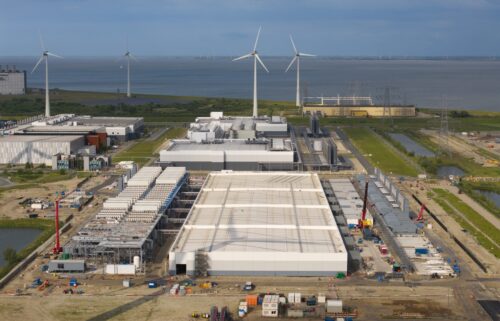
Power-hungry data centers are increasing electricity demand and pollution across the country. And if something doesn’t change, customers are likely to foot the bill for it.
But this risk also comes with an opportunity. With the right policies, state leaders can ensure data centers pay their own way, deploying clean, cheap energy they can build quickly, while simultaneously keeping costs low for ratepayers.
Data centers are increasing power demand, electric bills, and pollution across the country. Costs are going up because of grid upgrade needs and higher demand for power
States need to address both cost drivers by creating separate utility rates for data centers and making them pay for new clean energy to serve their own demand
Clean power is fast, cheap, and clean—solving three problems at once
This is how states like New York can seize the opportunity at hand, protecting both customers and the climate
How States Can Address High Costs from Data Centers with BYO Clean Energy Requirements
Two Different Ways Data Centers Are Increasing Costs
Data centers and their massive demands for power are putting a huge burden on our already aging and inefficient grid. Plugging in the amount of power needed for the artificial intelligence (AI) boom will require costly upgrades to the local grid and the construction of new power lines. This infrastructure costs a lot of money. As of right now, ordinary families that are already struggling to make ends meet are often being asked to foot the bill for those costly upgrades.
Data centers are also increasing generation costs, or the cost of the power itself, because of the spike in demand for energy they’re causing without adequately adding to the supply. Big tech is not paying its fair share for either its grid upgrades or power needs, forcing the cost of its data centers onto all of us.
Policy Solutions to Solve Both Problems
State leaders have an opportunity to address infrastructure upgrade costs and higher generation costs being driven up by data centers. Thankfully there are ready solutions to both problems.
1. Infrastructure Cost Protections: Large Load Tariffs
Many states are creating separate electric rates for data centers and other large loads. These specialized “large load tariffs” separate out data center demand from other electricity customers and ensure that their corresponding grid upgrade costs are paid by the data centers instead of the rest of us.
States can implement this solution with existing authority through their public utility commissions (PUCs), right now. At least five states, including Virginia, Indiana, Ohio, Michigan, and West Virginia, have already done so for at least one utility.
When creating separate rate classes or tariffs, state PUCs should be sure to create long-term contract requirements for data centers. This makes sure that tech companies actually pay the utility for the infrastructure built to serve their demand, for at least 15 years. That way, other customers aren’t left footing the bill if the AI bubble pops or a data center isn’t actually built. Some states, like Virginia, have recently required data centers to pay for 85 percent of power lines and 60 percent of needed generation for at least 14 years. Large load tariffs could also require data centers to sign community benefit agreements or fund initiatives that deploy cheap, clean energy or help families pay their utility bills, as has been proposed in Wisconsin.
But infrastructure cost protections only solve half the problem.
2. Generation Cost Protections: Bring Your Own New Clean Energy Requirements
States must also protect customers from the higher generation costs currently passed on to all customers. So far, no state has fully done so.
In most states, generation costs are largely determined through auctions for energy and capacity, where the relative levels of supply and demand determine how expensive power will be. Even if a large load tariff requires data centers to pay for some of their generation costs, the unprecedented demand increase is still driving auction prices higher for other customers. In the Mid-Atlantic region served by PJM Interconnection—currently the data center capital of the world—data center demand has already increased power bills by around 20 percent through higher auction prices for capacity.
The only solution to the generation cost problem is to remove data center demand from these auctions entirely or to require them to bring their own supply commensurate with their demand.
That’s where “bring your own new clean energy”—or BYONCE—requirements come in. With this policy, data centers bring an equivalent amount of clean capacity to the table as they themselves need, so supply and demand increase simultaneously and auction prices remain stable. This policy would require a new law to be passed by the state legislature.
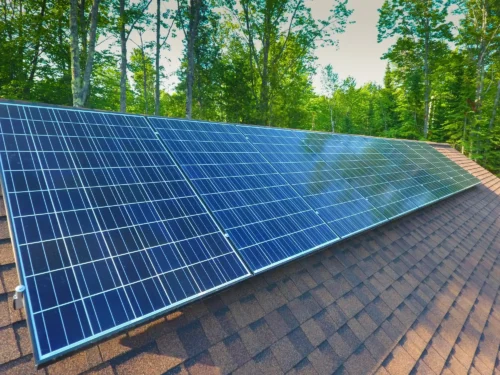
This energy must be clean, and it must be new. Utility-scale renewable energy and battery storage, and distributed energy resources, are the cheapest and fastest-to-build forms of power around. If data centers build new gas plants instead, this additional pollution could be locked in for 20–30 years, chaining communities to decades of pollution and high fuel prices while wrecking states’ climate goals. If the energy is not required to be additive, then data centers could take existing power plants offline and spike costs the same as if no requirement existed at all. This energy should be grid connected and does not need to be on-site, reducing land constraints.
Since it might take several years to procure even fast-to-build clean energy, states could offer to phase-in BYONCE requirements over a few years. In the interim, they could offer data centers a carrot in the form of “non-firm” service from the grid, where some amount of power is supplied from the grid when available but not guaranteed if there are shortages. This speed-to-power incentive has been proposed in Texas and PJM. In this scenario, non-firm demand would be excluded from capacity auctions to prevent spiking prices. Data centers would only receive firm service, with their demand included in capacity auctions, once they procure 100 percent of their BYONCE requirements. While this approach still risks increasing prices in energy auctions somewhat, it could assuage concerns that BYONCE requirements would push data centers to locate elsewhere.
Currently, 24 states plus D.C. and Puerto Rico have 100 percent clean electricity commitments, and a number of them have enacted 100 percent carbon-free energy requirements. In those states, regulators must ensure data centers are on track to meet these clean energy targets and not building new fossil generation that would operate after decarbonization deadlines.
These requirements would also be in line with the significant climate commitments of most big tech companies—Microsoft, for instance, has pledged that its operations will be carbon negative by 2030. Google has promised to achieve 24/7 carbon-free energy by 2030. Big tech companies are some of the wealthiest companies in the history of the world, with a high willingness to pay for power. With the right rules and incentives, they could be heroes in building a more affordable, clean, and resilient grid.
Clean Energy is a Triple Win: Cheap, Clean, and Fast to Build
Clean energy resources are not only cheap and non-polluting but also fast to deploy. Meanwhile, shortages of gas turbines mean that new gas generation likely couldn’t come online until at least 2032—and could be three times more expensive when it does materialize. Setting clean requirements would thus establish a clear glide path to achieving the “speed to power” these companies are so hungry for and provide a triple win: Cheap, clean, and fast power that keeps costs low, avoids spikes in pollution and delivers the power these companies are aiming for.
But the time to act is now. If states don’t and we continue on this current trajectory, the opportunity for this triple win may be missed, every day Americans will foot the bill for data centers’ needs, and costs and pollution will continue to go up.
New York State Is Primed to Act
One state with a real opportunity to act on infrastructure and generation costs this year is New York.
New York has a few key advantages. The state runs its own power market, through NYISO, and has its own dedicated state energy oversight and implementation body in NYSERDA. Currently, 25 data centers are in the queue in New York State, which could increase power costs significantly without action.
Governor Kathy Hochul, too, has increasingly prioritized solving this problem. Governor Hochul recently directed the state Department of Public Service to develop a new initiative, Energize New York Development. The initiative would require most data centers or other large loads to supply their own energy or pay more to ensure ratepayers are not footing the bill for large projects with limited economic return.
This proposal is a promising start, but we need to proactively ensure clean energy is front and center as it takes shape. As Energize New York Development considers a large load tariff, the Department of Public Service and the Public Service Commission must include long-term contract requirements to ensure data centers pay for their own infrastructure, deter “phantom” data centers, and to protect customers if the AI bubble bursts and companies go out of business down the line.
Second, the state legislature should build on the Governor’s proposal and require, as a part of this year’s state budget, data centers to procure their own clean energy capacity equivalent to their demand. This clean energy need not be on-site but should be newly built and within the NYISO territory. Such a requirement would make it significantly more likely that New York is able to meet the important clean energy requirements of the Climate Leadership and Community Protection Act: 70 percent renewable electricity by 2030 and 100 percent zero-emissions by 2040—all the more reason for Governor Hochul to stand firm on these targets.
Until a data center procures 100 percent of capacity from new clean energy, the data center could connect to the grid with “non-firm” service and agree to curtail during times of high demand. The quantity of firm service could also scale with the percentage of total capacity the data center has procured, from 0 percent to 100 percent. The state could also require data centers to buy local clean energy credits, or RECs, on an interim basis until BYONCE requirements are met.
This policy is an opportunity for New York to lead the nation on energy affordability and climate action. Many New Yorkers have already seen annual power bills increase by over $100 in the last several years. Action by the legislature and PSC is clearly needed—and constituents are likely to applaud leaders who take action to fight high prices and hold big tech companies accountable.
Now Is the Time for Action
States are beginning to act to protect their residents from data center cost increases, but there’s more work ahead. With thousands of data centers set to be built around the country in the next few years, power bills will spike without cost protections. Guardrails are only good, after all, if they go up before a catastrophe. By creating large load tariffs and BYONCE requirements, state leaders have the opportunity to land a triple win—protecting ratepayers from energy cost increases, cutting pollution, and delivering speed to power. The time to act is now.